21 May 2026
Think external shocks stay external? Think again!
BIRGER. is pleased to support the Business Continuity & Resiliency Awareness Week (BCAW+R), from 18 to 22 May 2026, under the main theme “Think You’re Resilient? Well, Think Again”. Today’s focus is "Think external shocks stay external? Think again!"
In this context and as part of our ongoing commitment to foster Organisational Resiliency, BIRGER. will share actionable daily tips designed to help organisations strengthen their resiliency. The objective is to encourage organisations understand how external shocks can cascade across supply chains, financial systems, regulatory environments, and workforce stability.
Our tips and recommendations to explore the daily tips along with our recommendations to help organisations strengthen preparedness against external shocks and their internal business impact:
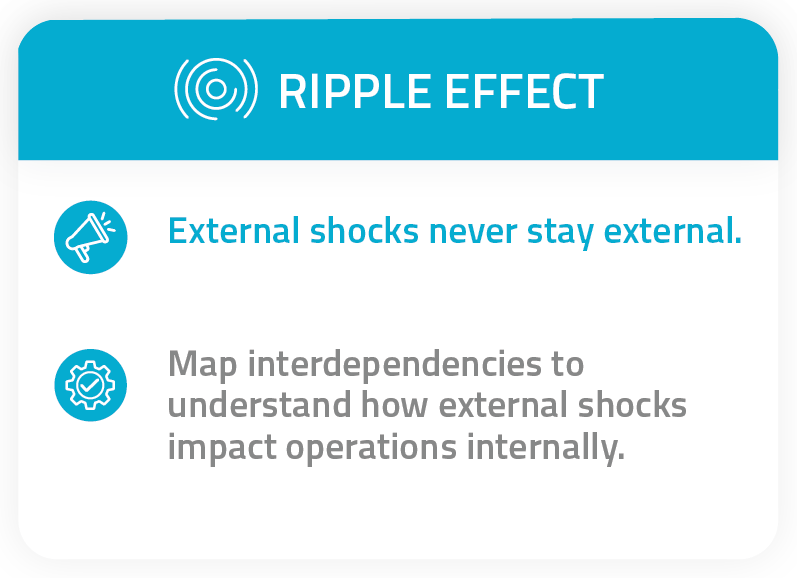 | 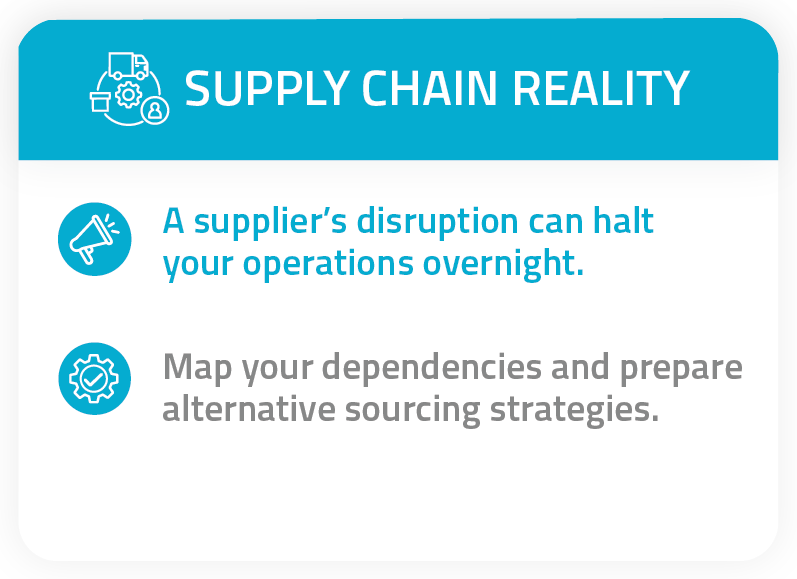 |
A geopolitical crisis, pandemic, or cyberattack in another region can rapidly propagate through global networks, impacting supply chains, workforce availability, and customer operations. These interdependencies mean that disruptions outside an organisation’s immediate environment can have direct and material impacts on business continuity. Resiliency therefore requires a broadened perspective that extends beyond internal operations to encompass external risks and global vulnerabilities. | External shocks can rapidly spread across interconnected systems, regardless of geographic or organisational boundaries. A disruptive event affecting a single supplier, logistics partner, or service provider can cascade through the value chain and halt operations if critical dependencies are not identified and managed in advance. Resiliency therefore requires clear dependency mapping, continuous risk monitoring, and tested alternative sources and contingency pathways. |
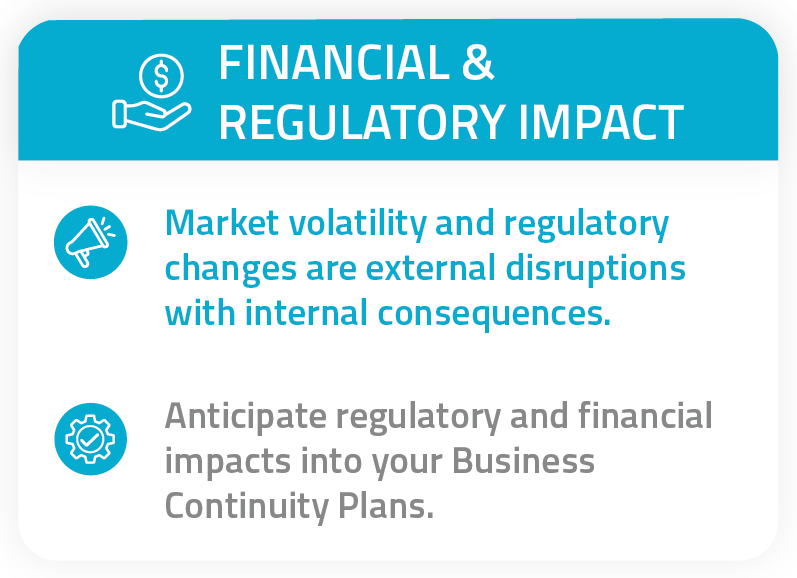 | 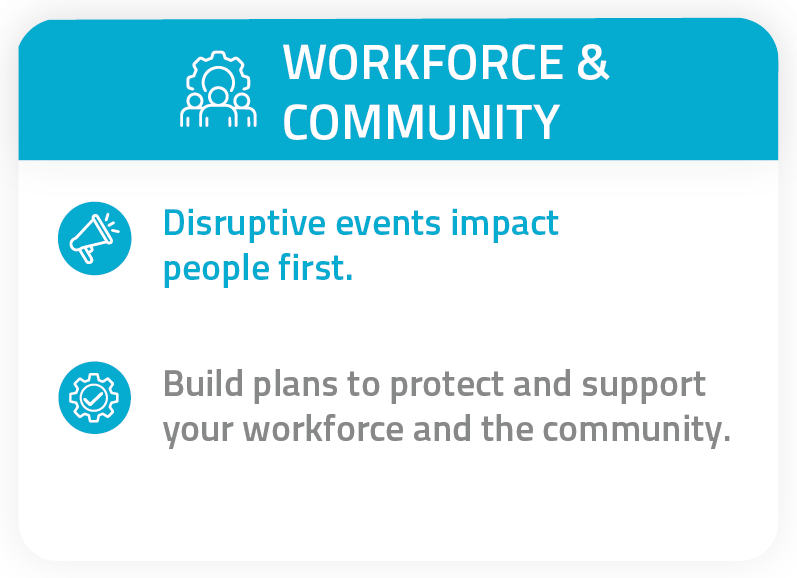 |
Market volatility, sanctions, and regulatory shifts can quickly translate into significant operational, financial, and compliance consequences. To address this, continuity planning should incorporate scenario analysis, stress testing of financial exposure, regulatory impact assessments, and clearly defined escalation protocols for compliance and governance. A resilient organisation embeds these practices into its planning cycle to anticipate, absorb, and respond effectively to such risks. | External disruptive events are first and foremost felt by people, particularly employees and surrounding communities. Events such as health crises or social unrest can affect safety, wellbeing, availability, and morale long before they impact operations. Effective planning must therefore prioritise workforce protection and support mechanisms, including clear communication, safety protocols, and employee assistance measures, ensuring people remain protected and supported as the foundation of Organisational Resiliency. |
Click here to download the tips. Stay tuned and explore our daily tips to strengthen Organisational Resiliency.
For more information on the topic and on our Resiliency Solutions & Services, please contact us by email resiliency@birger.technology.
Regards,
BIRGER.