22 May 2026
Think your leadership culture can handle crisis? Think again!
BIRGER. is pleased to support the Business Continuity & Resiliency Awareness Week (BCAW+R), from 18 to 22 May 2026, under the main theme “Think You’re Resilient? Well, Think Again”. Today’s focus is "Think your leadership culture can handle crisis? Think again!"
In this context and as part of our ongoing commitment to foster Organisational Resiliency, BIRGER. has shared actionable daily tips designed to help organisations strengthen their resiliency. The aim is to encourage organisations reflect on how leadership behaviours, communication, transparency, and governance shape crisis outcomes and Organisational Resiliency.
Our tips and recommendations to help organisations strengthen leadership capability and build a resilient organisational culture under pressure:
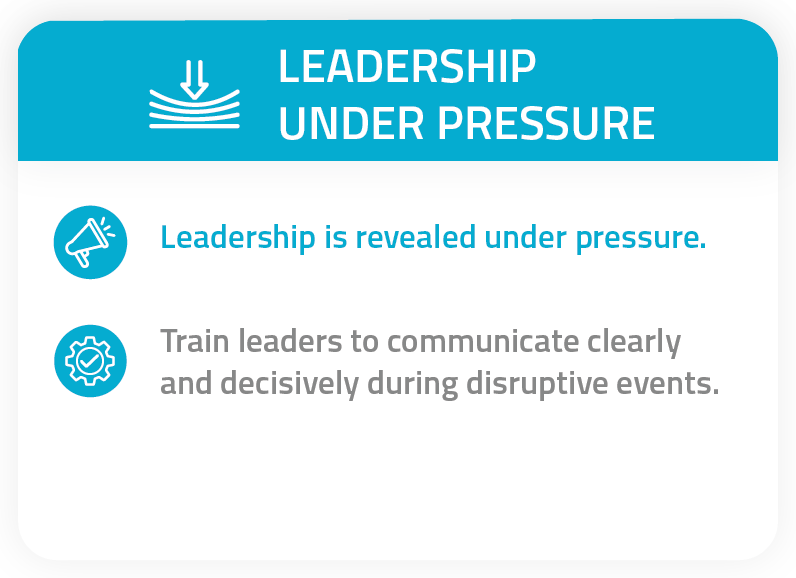 | 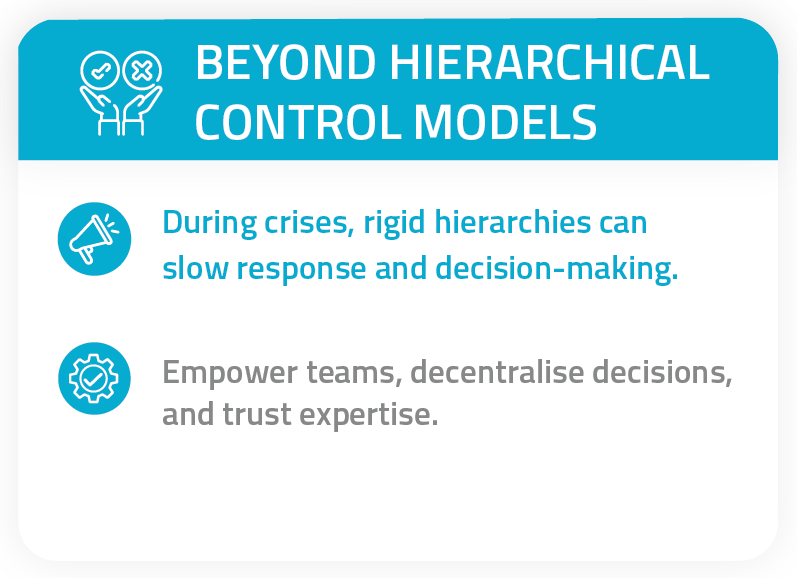 |
True resiliency is demonstrated when leaders maintain clear communication, make timely and informed decisions, and sustain confidence within their teams under pressure. In high-stress situations, clarity of communication and decisiveness in action are critical to preventing confusion and maintaining coordination. In addition, the ability to instil trust and stability determines how effectively an organisation can navigate and recover from disruptions. | In times of crisis, rigid hierarchical structures can hinder responsiveness and delay critical decision-making. Organisations should therefore empower teams, decentralise decision-making where appropriate, and rely on domain expertise to enable faster, more effective action. To remain resilient, leadership culture must be sufficiently adaptive to support distributed decision-making while maintaining coherence under pressure. |
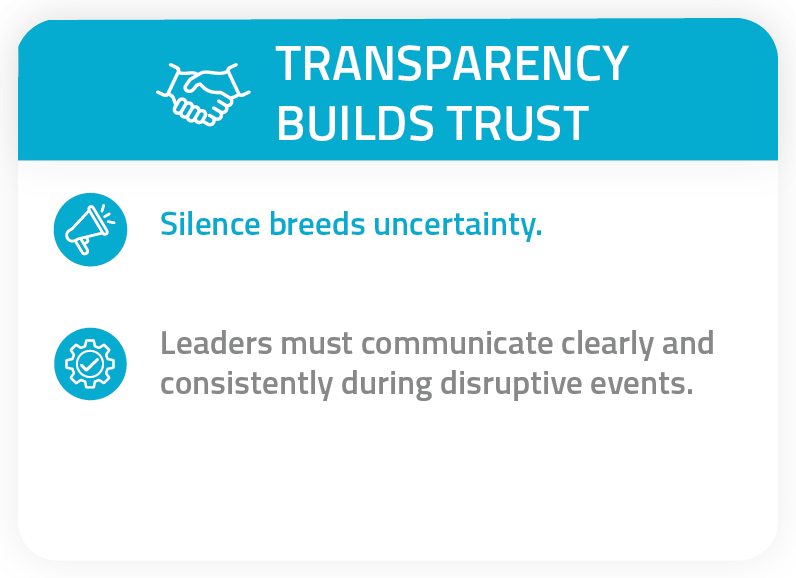 | 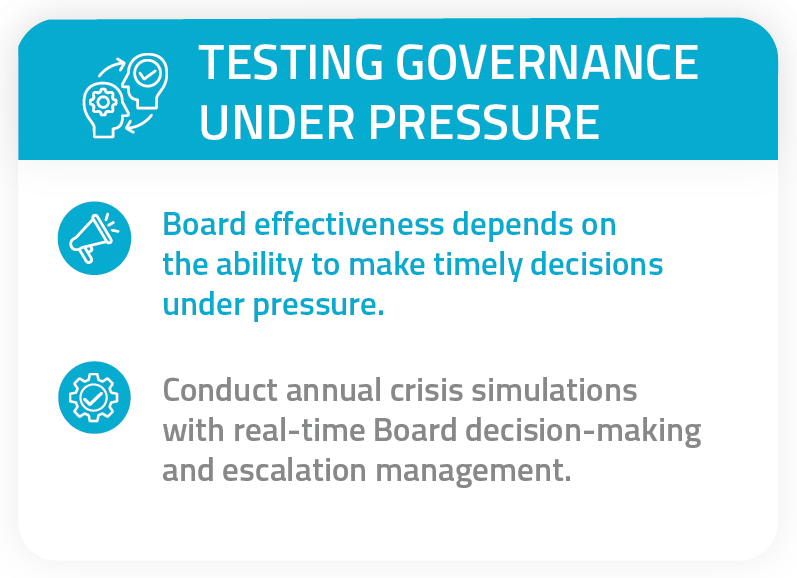 |
Establish structured communication protocols that ensure timely, transparent, and frequent updates during disruptive events. Leaders should proactively provide clear guidance on actions and priorities. Consistency builds trust, reduces anxiety, and prevents misinformation. Communication should be two-way, enabling feedback from employees and stakeholders to refine responses and strengthen organisational resiliency over time. | Boards should participate in at least one crisis simulation exercise each year, engaging directly in real-time decision-making. These exercises should assess how quickly escalation reaches the Board, how clearly information is communicated, and how effectively directors make decisions under pressure. This helps determine whether governance enables fast, coordinated response or becomes a bottleneck during disruptive events. |
Click here to download the tips. Stay tuned and explore our daily tips to strengthen Organisational Resiliency.
Thank you for your engagement throughout this week. We hope the daily tips shared have contributed to strengthening your Organisational Resiliency.
For more information on the topic and on our Resiliency Solutions & Services, please contact us by email resiliency@birger.technology.
Regards,
BIRGER.